Showing posts with label Excerpts. Show all posts

Friday, 1 March 2013

“Silence is easy”

Found this article on the Net. It is about an issue that true dog lovers in Malaysia face and can only understand the degree of discrimination the canine species faces in this country.There should be more Malays like the author.

Why are the Muslims of this country (particularly the Malay Muslim group) so filled with hate toward the canine species?

By now, many Malaysians are aware of Pak Mie and his heroic deeds of rescuing and caring for over 500 dogs in Alor Setar, Kedah.

Most of us are amazed by his spirit, and have even rallied together to help him in his cause.

Yet a note that keeps recurring in the articles and videos that feature Pak Mie and his wife is one that disgusts me, as I’m sure it has for anyone with a heart.

Despite Pak Mie’s purest intentions, a majority of his Malay community has shunned and condemned him, labelling him as an infidel and morally corrupt.

Why are the Muslims of this country (particularly the Malay Muslim group) so filled with hate toward the canine species? Growing up, I was ill-informed and learned that Muslims weren’t allowed to own dogs.

I later understood that this was a simplified version of the teachings, and untrue. Dogs are considered to be dirty, and there are specific ways to cleanse oneself according to Islam when touching a dog when it’s wet or its feces and urine.

However, it was and had never been haram for a Muslim to own a dog.

Why the silence?

Yet it is common for many Malaysians to see dogs getting beaten, objects or hot boiling water thrown at them, and I’ve even heard of cases where razor blades are stuffed into sausages and fed to the dogs.
A friend of mine had his dog poisoned by his Malay neighbour. Dogs aren’t just considered a nuisance by this group of people; they’re a target for violence.


Still, what angers me most is not the cruelty of these misguided Malay Muslims. What makes me angry is the silence of other Muslim dog lovers.

I know there are plenty of us out there who not only is against cruelty towards dogs, but are also Muslims who own dogs. Yet whenever such disgusting acts take place, where is your voice?
Why must we keep our ownership a secret? We fear judgment and so we leave the fight for the rights of these animals to the non-Muslim community.


Last October, I lost my six-month-old Shetland Sheepdog to a hit and run. We were coming back from our morning walk, and his leash fell out of my hand. He ran back to the park near our house.

When I caught up to him, his dying body was twitching in the middle of the road, his head soaked in blood. As I cradled my baby, neighbours rushed to my side. I was touched by their assistance- one ran back to her house to get some blankets, another went to get a bag, and two other dog owners walked me home, comforting me. I am forever grateful to them for their kindness.


Jaqen was a very friendly dog. He was popular among the kids and other dog owners at our park, and would show off his ‘fetching’ skills when we played ball.

But I recall little kids who played with him asking me “Are you Malay?”, and upon my reply would say “My mother says Malays cannot have dogs.”

I would patiently correct each misinformed child but I was annoyed at how parents nonchalantly pass this information to their children.

It’s bad enough you hate dogs; must you also teach your children to do the same?

Religion as excuse


It’s not enough to punish those who are cruel to dogs. We need to make them see not all Muslims hate dogs.

We need them to stop using religion as an excuse for their crimes. We need to show our support to people like Pak Mie, and we need to make it loud and clear.

We need to work together with bodies like SPCA and other animal rescuers by reaching out to the community to educate the people on this issue, from both moral and religious standpoints.

Start young, go to the schools and get the teachers to participate as well. Teach the children that all animals should be treated with kindness and respect.

We also need to have stricter laws on animal cruelty. As it stands, the price of the fine for such crimes is way too little to make a difference.

Finally, if we can’t all devote our lives toward rescuing animals, the least we can do is to lend a hand to people like Pak Mie who spends all of his time and savings in his effort to make this world a better place. He cannot do this alone.

Let’s start by speaking up. I am Muslim. And I love dogs.

Elza Irdalynna writes about art, love, and other things she pretends to understand.
She is also an FMT columnist.

Sunday, 24 July 2011

Dato' Dr. Ambiga Sreenevasan: Rule of law, rule by law

Barely a week after Najib went to London to see the Queen who was so elegantly dressed in yellow, and after he said British PM, David Cameron was briefed by him about the true intentions of Bersih, Dato' Ambiga becomes Dato' Dr Ambiga in Exeter, UK. What are our former colonial masters thinking?

Bernama, quoting Najib reported that: Cameron was also briefed that Bersih’s real aim was not to press for electoral reform as professed but rather to portray the Malaysian government in an autocratic light in order to wrest power from an elected entity.

The prime minister ended by saying that he had stressed the Malaysian government always upholds the principles of democracy and has never cheated in a general election because those held in Malaysia are free from fraudulent practices.


This is one of eight recipients of the US Secretary of State “International Women of Courage” Award in 2009. This is the woman whom Anwar WILL TELL to cancel the Bersih 2.0 rally on 9th July. This is the woman who has shown more gumption, courage and leadership than Najib and any PM wannabes today. Najib doesn't seem to have much luck with women does he? Imagine if Dr Ambiga is ISAed or EOed for being Bersih. 

The following was the acceptance speech delivered by Datuk Dr Ambiga Sreenevasan upon her conferment with the Honorary Doctorate Of Laws, University of Exeter. Read it and know:


Rule of law, rule by law
By Ambiga Sreenevasan
I urge you to use this arsenal of knowledge and your passion for justice to fight for those who are downtrodden.

You have already heard of the events of July 9th in Malaysia. Whilst it brought out the worst in some, it brought out the best in others and this is where our hope lies.
JULY 23 — Good Morning! Chancellor, vice chancellor and graduating students.

It is so good to be back!

I am deeply moved by the conferment of this honour upon me. That it comes from my alma mater is especially significant for me. That it comes at this time is almost providential, for it allows me and all lawyers to reflect on our roles in the societies we live in.

For this honour and this moment of reflection, I extend my grateful thanks to the Council and Senate of the University of Exeter.

Tired of injustice and oppression, people the world over are crying out for truth, goodness, justice and universal love and understanding.

The events in Malaysia over the past six weeks culminating in the rally for free and fair elections on the 9th of July, has taught me so much more than I could have ever learned in the last 30 years as a practising lawyer.

My team and I faced first-hand the full force of the unleashed power of the state, and I realised then the importance of the independence of the Institutions of government, particularly the judiciary, to check such abuses of power.

I also realised how real and present the absence of the Rule of Law can be.

In countries where the Rule of Law reigns strong and true one probably does not even talk about it. But in countries that veer towards Rule by Law, talking about getting back to the basics is crucial.

In many countries, Rule by Law is reflected in the existence of repressive laws that violate the fundamental rights of its citizens. One example of this is preventive detention laws that lock people away without affording them the basic right to a trial. There are many examples of such oppressive laws worldwide and they are not confined to underdeveloped or developing countries.

As lawyers, we are in a unique position. Our years of legal study and practice teach us to see and appreciate the fundamental role that the Rule of Law plays in guaranteeing that the state governs its citizens in a just and democratic manner.

Who better to remind those in power of their responsibilities to their citizens than lawyers trained in understanding the difference between “Rule of Law” and “Rule by Law”?

Our role as lawyers must therefore extend far beyond traditional legal practice.

Here, I make no reference to rules, guidelines, documents, or declarations. My only reference point is our conscience. Can we as lawyers, ever sit back and watch the erosion of fundamental liberties of the people around us and do nothing? Clearly, silence in these circumstances, is not an option.

When I graduated from this university about 30 years ago, things were of course very different. Today the Internet and social media has empowered people with a continual flow of unfiltered and up-to-date information. No longer can the manipulation and control of information be effectively used by those in power to suppress either thought or action.

You are in a world where you know instantly of injustices taking place in any part of it. In this global village drawn together by so many factors, we are one. We can reach out to each other using these new means of communication and we owe it to each other to stand together for what is right.

You may say, “But I studied law to be a solicitor or barrister and to earn money for a decent standard of living”. There is nothing wrong with that, I assure you. I run a commercial litigation practice in a partnership of four where we also do public interest litigation. The two can co-exist quite comfortably.

The point I make is this.

You are graduating from one of the best universities in the country if not on the planet! You are special. And you are now a proud member of an army of people that is equipped with all that is necessary to both practise law and to fight injustice.

I urge you to use this arsenal of knowledge and your passion for justice to fight for those who are downtrodden.

You have already heard of the events of July 9th in Malaysia. Whilst it brought out the worst in some, it brought out the best in others and this is where our hope lies.
There were some in government who opposed the methods used to shut us down. Even doctors left their comfort zones to speak up against injustices. And of course there were the lawyers and the independent media who stood on the side of truth and justice.
However, the real heroes of that day are our friend and supporter Allahyarham Baharuddin Ahmad who paid the ultimate price in fighting a noble cause, the six members of the Socialist Party of Malaysia who, as we speak, sit in solitary confinement under preventive detention laws and finally the brave people of Malaysia who overcame their fear of intimidation and harassment to uphold their fundamental rights.
With all my heart I dedicate this honour you have bestowed upon me to them.

Friday, 3 June 2011

IPP Owners Need Not Defend Their Contracts. The Government Is Doing All The Talking. Ever Wonder Why?

Ex-Government Appointees coming out of the woodwork? This Ani Arope would know what he is talking about, wouldn't he? The IPPs are basically Mahathir's babies and legacy. I am sure he will not let this go unanswered; the question is, what will he say. What can he say? We wonder why the IPP owners are not defending themselves but it's the government doing all the fire-fighting. Ani Arope's term "Economic Plundering Unit" will stick and one wonders who the EPU plunders for. This is in the Malaysian Insider:

Ani Arope blames high power tariffs on ‘Economic Plundering Unit’
June 03, 2011
KUALA LUMPUR, June 3 — Former Tenaga Nasional Berhad (TNB) chief executive Tan Sri Ani Arope is blaming the Economic Planning Unit (EPU) for rising electricity tariffs, saying the powerful agency forced the national power company to sign lopsided purchase deals nearly 20 years ago.
Ani said EPU, which he sarcastically dubbed "Economic Plundering Unit", forced Tenaga to buy electricity from an independent power producer (IPP), believed to be Genting Sanyen, at 14 sen per kilowatt hour (kWh) despite an existing offer of 12 sen/kWh then; other IPPs then were charging 16 sen/kWh.
Genting Sanyen became the first IPP to transfer 15 million watts (MW) in electricity to TNB’s national grid on April 15 and is scheduled to complete a RM1.8 billion upgrade on its existing gas-fired plant with a capacity for 720 MW by June next year.
“You don’t need to go to a fanciful business school to figure out why we need a tariff hike — just revisit the terms given to some IPPs,” Ani, who helmed the utility company between 1990 and 1996, said in his last Facebook posting three days ago.
“With the take-or-pay clause and with the 40 per cent excess reserve that we have today, one only has to produce half of one’s capacity and be paid 80 per cent of the agreed capacity. Well done the then-EPU — Economic Plundering Unit,” he added, mocking the economic unit under the Prime Minister’s Department.
Ani called for a review of the original terms with the IPPs as the storm over energy price deals continues to build up.
DAP publicity chief Tony Pua cited today Ani’s 2006 interview with English daily, The Star, to increase pressure on the federal government to declassify the power purchase agreements (PPAs) inked between TNB and the IPPs.
Ani caused a stir 15 years ago when he chose to resign from his executive chairman post rather than sign the imbalanced deals, which saw the first generation of IPPs created, such as YTL Power Services, Powertek and Malakoff during the Mahathir administration.
“TNB is the whipping boy. TNB has no control of the price it has to pay to the IPPs. Get to the source of the problem,” said the Penang-born who turned 79 on May 17.
The Najib administration has been savaged for allegedly protecting the interests of IPPs rather than the public.
Putrajaya announced the 7.12 per cent hike in electricity rates in an effort to trim a subsidy bill that would otherwise double to RM21 billion this year and promised the hike will not affect 75 per cent of domestic consumers.
But power prices will now rise by as much as 2.3 sen per kWh in areas taking TNB’s electricity supply, a potential source of public anger just ahead of a general election expected within the year.
The Star daily reported today the government was close to inking a deal for a 1,000 MW coal-fired plant in Manjung which will charge 25 sen/kWh.

Cancer Con?

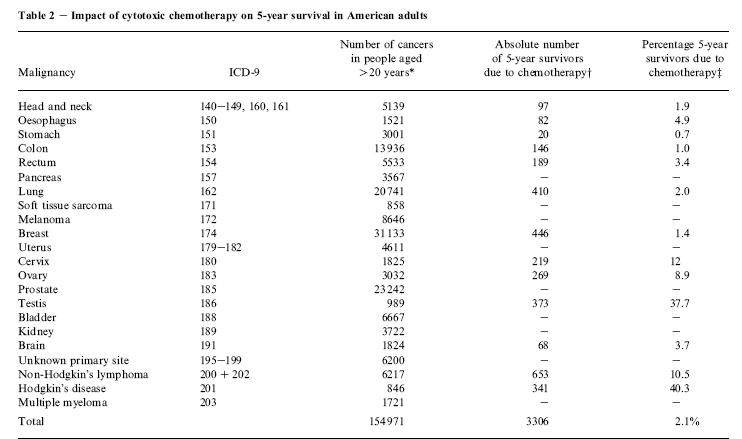
Found these two articles on the Net. Chemotherapy is just another colossal con-job! The statistics itself speak. The following are excerpts:
****************************************************
Improving Health of Cancer Patients - July 16, 2010

Richard Loyd, Ph.D.

It is my opinion that in general, cancer is not a medical emergency that requires immediate invasive and toxic interventions. It is a degenerative condition that requires improving of health. There are medical emergencies that require the best medical help you can find. Car accidents with catastrophic injuries or life-threatening burns are examples. In those cases, you need the best emergency room you can find. Cancer can become a medical emergency. If the digestive tract is completely blocked by a tumor so that passage of material is impossible, emergency surgery may be needed. If breathing is becoming impossible due to a tumor blocking the respiratory tract, emergency intervention is appropriate. If a tumor in the brain has grown to the point where there is pressure that is causing damage, surgery may be advisable. It also possible that medical treatment for cancer will cause enough damage that more medical treatment will be required. But in general, cancer is not a condition that requires treatments that actually worsen health.

Many people are trying to recover from cancer with non-toxic therapies. This is an attainable goal and it is often achieved. Patients often spend a lot more money than necessary and take huge numbers of pills, many of which do not have a direct bearing on their problem and may even block progress. More may not be better!

People sometimes tell me that they were perfectly healthy until the cancer suddenly appeared. I point out that they were not really healthy. They had viral infections, toxic metals, parasites, infections in tooth sockets, radiation stress, bowel toxicity, chemical toxicity and probably mold toxicity. There may have been a metabolic imbalance. In other words, the things that cause cancer. The things that have to go away so they can get well.

Anyone with a condition that normally requires the services of a physician is urged to consult one. Ask your physician if this program can be used along side whatever medical treatment you decide on. This is not a "cure" for cancer. It is a method of becoming healthy. If you are considering chemotherapy or radiation, ask your oncologist if the suggested therapy ever cures your kind of cancer. If the answer is "no", then THINK ABOUT THIS! Of those who depend on chemotherapy for survival (in other words, the surgeon "did not get it all"), the five year survival rate is only 2.1%. For some cancers the rate is better, but for some types of cancer, it is 0%.


Does this make you feel like chemotherapy is a cruel fraud in most cases? If you do not get that impression yet, please study the chart some more!


****************************************************

How Much Is Life Worth: Cetuximab, Non–Small Cell Lung Cancer, and the $440 Billion Question
By Tito Fojo, Christine Grady

Affiliations of authors: Medical Oncology Branch, Center for Cancer Research, National Cancer Institute (TF), and Department of Bioethics, The Clinical Center (CG), National Institutes of Health, Bethesda, MD . Correspondence to: Tito Fojo, MD, PhD, Medical Oncology Branch, Center for Cancer Research, National Cancer Institute, National Institutes of Health, Bldg 10, Rm 12 N226, 9000 Rockville Pike, Bethesda, MD 20892 (e-mail: tfojo@helix.nih.gov ). See “Notes” following “References.” DOI: 10.1093/jnci/djp177 Published by Oxford University Press 2009.


The spiraling cost of cancer care, in particular the cost of cancer therapeutics that achieve only marginal benefits, is under increasing scrutiny. Although health-care professionals avoid putting a value on a life, our limited resources require that society address what counts as a benefit, the extent to which cost should factor in deliberations, and who should be involved in these decisions. Professional societies, such as the American Society of Clinical Oncology, government agencies, including the Food and Drug Administration, and insurance companies should be involved. However, no segment of society is better qualified to address these issues than the oncology community. Oncologists must offer clear guidance for the conduct of research, interpretation of results, and prescription of chemotherapies. We review recent drug approvals and clinical trials and comment on their relevance to the issue of the spiraling cost of oncology therapeutics. We suggest some standards that would serve as a starting point for addressing these issues.

The year 2008 was one with few major breakthroughs in cancer treatment. A highlight of the war on cancer at the annual meeting in 2008 of the American Society of Clinical Oncology (ASCO) was the reporting of the results of a multi-institutional European trial in which cetuximab was added to cisplatin and vinorelbine to treat patients with non–small cell lung cancer (NSCLC). The overall survival (OS) advantage from adding cetuximab was 1.2 months (hazard ratio [HR] = 0.871, P = .04). This extra time was accompanied by a substantially higher rate of febrile neutropenia in those receiving cetuximab, along with higher frequencies of acne-like rash, diarrhea, and infusion-related reactions. Unfortunately, there were no systematic quality-of-life assessments reported to objectively determine the tolerability of the agent compared with conventional treatment.

Did the results of this trial constitute a breakthrough? According to the researchers, “Cetuximab added to a platinum-based chemotherapy sets a new standard for the first-line treatment of patients with non–small cell lung cancer”. And the ASCO press briefing asserted, “these findings are likely to have a significant impact on the care of patients with these types of cancer”. But the only reasonable conclusion is that a magic anticancer bullet aimed at an important target missed by a wide margin. Nevertheless, the presentation raised once again an even more pressing and important set of issues: What counts as a benefit in cancer treatment? How much should cost factor into deliberations? Who should decide? As oncologists, we cannot go on without answering these questions. The moral character of our specialty depends on the answers.


Drug (brand name)
Regimen
Dose†
Amount needed†,‡
Cost per milligram or cost per tablet
Total cost‡
Increase in OS‡
Cetuximab (Erbitux)
Loading: 400 mg/m2; maintain: 250 mg/m2/wk
Loading: 600 mg; maintain: 375 mg
6975 mg
$11.52/mg
$80 352
1.2 months
Bevacizumab (Avastin)
10 mg/kg every 14 d
600 mg every 14 d
13 200 mg
$6.88/mg
$90 816
1.5 months§
Erlotinib (Tarceva)
150 mg daily
150 mg/d; 1 tablet per day
112 tablets
$140.64 per tablet
$15752
10 days
Sorafenib (Nexavar)
400 mg twice a day
800 mg/d; 4 tablets per day
692 tablets
$49.67 per tablet
$34373
2.7 months


* Costs from Red Book 2008 (Drug Topics Red Book) by Harold Cohen. PFS = progression-free survival. OS = Overall Survival
† Calculated for a 60 kg/1.5 m 2 patient.
‡ For the regimen cited, administered as in the study cited, until the time of median disease progression as reported in the published study.
§ Not statistically significant.


Read more here

****************************************************

You be the judge...ask an oncologist to undergo chemo when has cancer.

Monday, 7 February 2011

The Mad Hatter Stuck At 6.00

You may or may not agree totally with this one from Malaysiakini:

Mahathir - a moderate Muslim Machiavelli
Tom Plate Feb 7, 2011

You could love him or hate him but ignore him you could not.

Hardly a month would go by without some new initiative launched, the grandiose master plan tabled, new policy proffered. Say what you will about Mahathir Mohamad – may it be positive or negative – Dr M was a political phenomenon.

Even back in America, on the West's self-absorbed media radar screen, traces of Mahathir would surface from time to time. During the Silicon Valley revolution in the 90s, it caught Malaysia's PM making the West's money rounds, peddling his multimedia super-corridor like some software salesman.

During the Asian Financial Crisis, he positioned himself as the 'Conscience of the East', berating Wall Street (and sometimes baiting the Jews) for its destructive “shorting” attacks on his region's currencies. And within Malaysia itself, of course, Mahathir's name became synonymous with controversy and contradiction.

But outside the country, his legacy will increasingly be viewed in the context of the 'Clash of Civilisations' issue that seemingly has replaced the old Cold War as the chief obsession of the West.

This is a main theme of my new book 'Conversations With Mahathir Mohamad', the second volume in the 'Giants of Asia' series (next up: another controversial former prime minister, Thailand's Thaksin Shinawatra).

The question of legacy is important because history may well decide to downplay Mahathir's serious flaws and rhetorical excesses and in the final analysis, position him as one of the late 20th century's most important Muslim leaders. History may well decide that Dr M was a notably successful modern moderate Muslim Machiavelli at the very time the rise of the al-Qaeda was so unnerving to the West.

In the United States, you see, when the label “Muslim” is used, it tends to invoke flaming skyscrapers toppled to the ground. Jihads, however obscurely aimed or ambiguously intended, make Americans jittery. In fact, much of the US nation continues to suffer from a post-911 traumatic stress syndrome. So today Muslims will not likely get picked up on the media radar screen over here unless they're creating a clear and present danger.

But most Muslims go about their daily business like the rest of us – raising families, holding onto jobs, trying to make their way through life's ups and downs. What's especially lost on the West is the track record of those gifted, moderate Muslims whose records of accomplishment remain below our radar precisely because their moderation seems so categorically un-newsworthy.

Turning fundamentalism on its head

It is this larger and grander story of the mainstream Muslim that the West fails to absorb. The extraordinary Machiavellian tricks of the moderation trade that are required of a Muslim leader needing to keep his political balance while guiding the nation economically are hardly any less spectacular for their complexity than a complex terrorist plot. Moderation in the pursuit of a better life for all is no vice – and its achievement is clearly a notable virtue of governance.

But Mahathir, in my conversations with him, was in aggressive denial about his moderation. In fact, to his face, it will get you nowhere to call him a “moderate.” He doesn't like it and in fact he will deny it.

To deflect any suggestion that his brand of Islamism is anything but tough-minded and Quran-pious, Dr M will insist his true religion is Muslim fundamentalism at its most intelligently fundamentalist. And so may no “ultra” Muslim - no pure-as-the-driven-Islamic-snow mullah - be given reason to depict him as some softie that's been genetically re-engineered into some Western secular poodle.

Malaysians of course understand that Dr M is nothing if not clever. And thus its longest-running PM (1982-2003) turns “fundamentalism” on its head by insisting that, fundamentally, Islam is moderation itself. “So, I adhere to that teaching - become a Muslim fundamentalist, and Muslim fundamentalism must let me be moderate,” he told me, rather cleverly - but not, I think, insincerely.

More than verbal wordplay animates the good doctor. I am convinced, after the intense conversational sessions for the book, that his international pacifism (he is virtually anti-war) arises from his own personal philosophy – and from his public insistence of Islam as a powerfully peaceful religion.

Accordingly, I became convinced that his occasional resort to domestic repression - via the invocation of Malaysia's internal security laws - was in fact painful and aberrational, not at all joyful.

Yes, it is fair to say that he was not adverse to resort to hard power - though in his conversations with me he expressed deep remorse over handing the police so much power at times. But he admitted that every resort to repression was probably a symptom of failure. (It is not hard to believe that somewhere in his heart, he harbours the wish that the Anwar Ibrahim mess has been handled differently - and better.)

It was certainly illuminating when I asked him about Machiavelli's famous dilemma - Whether it is better for the Prince to be loved or feared. His response was quite different from that of Singapore's Lee Kuan Yew.

The subject of my first book in the Giants of Asia series ('Conversations With Lee Kuan Yew') said that, if he had to choose, he would choose fear over love. But Mahathir's choice was - rather unabashedly expressed - to want to be loved.

But will the average Malaysian believe this? Not being the average Malaysia, I have no idea. But when he answered this way, I no more doubted the sincerity of his answer than the sincerity of LKY's.

A man of contradictions

Yes, Mahathir is a man of contradictions. And especially for the sympathetic Western journalist, the effort to scope out this complex Machiavellian Muslim was made much more difficult by his troubling - and dreary - attacks on Jews and Israel, just about whenever he needed someone to blame with whose demonisation his constituency would have no special quarrel.

But he jabbed at this convenient punching bag too much, whatever the demands of domestic politics. So is he in fact an anti-Semite?

It was difficult, sitting in his stratospheric office in Petronas Tower One, or in his Perdana Foundation crib in Putrajaya, to imagine this clever, sophisticated man as out-and-out anti-Semitic. Others share this doubt, too.

Consider the judgment of former Asian Wall Street Journal editor Barry Wain, in his rigorously detailed, scholarly bestseller 'Malaysian Maverick' (2009): “…Almost no one who knew him well or observed him at close range for any length of time believed he was anti-Semitic.”

That Mahathir resorted to seemingly anti-Semitic language proves to me not that he has anti-Semite sentiments but that he was a Muslim Machiavellian. He used whatever tools, rhetorical or whatever, he could get his hands to keep his people and his party with him - and his country moving forward.

The bottom line is that Mahathir's 22-years of moderate Muslim Machiavellianism left behind a country far more developed than it was in 1982 when his reign began. His successors are now notably hard-pressed to maintain the same pace.

They also seem hard-pressed to keep Malaysia as calm and productive. Dr M himself expresses enormous satisfaction that, during his time, all more or less remained quiet on the ethnic and religious tension front.

He imagines that he helped position the country somewhere between Turkey, on the one hand, and Iran on the other. That made great sense. It's doubtful that a rigidly secular governance approach would work for Malaysia, or that a purely Islamic Republic of the Iran variety would be remotely good for it.

Malaysia, for all its problems, is admired internationally precisely because of its moderate Muslim modernisation. Can anyone imagine Malaysia erupting in the manner of Egypt? Certainly it could not have happened on Dr M's watch.

Construct this notion in another, even more provocative way: Can anyone imagine Egypt coming to a stop, as it has this past week, if its leader these past decades had not been the clumsy Hosni Mubarak but the clever Mahathir Mohamad? This is the implicit thesis of my new book 'Conversations With Mahathir Mohamad', and it offers significant international implications.

It is time for Malaysians to give this devil his due.

Professor TOM PLATE is author of 'Conversations With Mahathir Mohamad', just published by Marshall Cavendish, and is the newly appointed distinguished scholar of Asian and Pacific Studies at Loyola Marymount University in Los Angeles. He is a veteran American journalist whose regularly syndicated columns on Asia, since 1996, have appeared in newspapers around the world. The next 'Giants of Asia' book will focus on Thaksin Sinawatra, until the 2006 coup in Thailand that country's longest running democratically elected prime minister.

Saturday, 23 October 2010

Boundaries And Transitions; Differing Values

Haris Ibrahim's sister, Farida wrote a touching piece as re-produced below from the SABM E-Group and in Haris' blog, The People's Parliament. I would assume the boy Farida refers to is Haris' son. 

BOUNDARIES AND TRANSITIONS

My late mother had a special relationship with each of her grandchildren. One grandson, the youngest among them, brought her much fun and joy in her latter years.

They were so in tune with each other despite the 73-year gap that it was such a pleasure to see them together. Grandson adored his Nenek and she cherished him with all her heart.

It pleased Mum when he came by and shared with her the things he had done at home and in school. In many ways he had inherited her business acumen and her artistic talent. While in primary school, he had sold pencils and his Star Wars-like drawings to classmates and it took almost a year before his parents found out about this clandestine activity.

My mother would laugh heartily at his tales and when he told how he stood up for what was right, she would beam with pride. This boy belonged to her. He was hers in the twilight of her years.

I was usually around when he came to stay or when the lovely phone conversations between them took place. Those calls always went something like this before the two said their goodbyes and hung up:

Mum: I love you.

Grandson: I love you too, Nenek.

Mum: I love you more than you love me. My love for you is taller than the tallest tree.

Grandson: Nenek, my love for you is higher than the clouds….

And this would go on and on and include dinosaurs, the seas, the stars and planets but invariably Grandson would top it all with “Nenek, I love you to infinity.”

And that was where Mum got stuck, without any answer to give back.

During the December holidays two years ago, he came again to stay for about a week. But this time he found a much frailer grandmother waiting for him.

Several diseases had plagued her body over long, long years and Mum had borne the pain and discomfort with remarkable fortitude. But time had taken its toll on her health and an aging body made it so much harder to battle the diseases.

On the first day of his visit, Grandson looked at Mum’s food and couldn’t believe what she was having - cooked vegetables, rice and chicken all blended finely into a flavoured porridge for her to take in easily.

In his great love for her, he asked, “Can I taste?” and he took a spoonful. The look on his face was telling.

“Poor Nenek,” he said, a sad finality in his voice that could only mean he wished he could do something about it but couldn’t.

The pattern of fun had to be scaled down, with outings no longer a regular feature as in former times. Mum needed help going up and down the stairs and he was always ready to offer a steadying hand. While Mum had her late morning and afternoon naps, he spent his time reading or on the computer or talking to me.

On his fourth day, I decided to take him out for breakfast at a kopitiam, and then for an art class. We had just finished eating when his dad called to ask if he wanted to stay on or follow him back. I passed the phone to him and saw a flash of discomfort on his face.

I caught on when I heard his “ er...er…” and “ I’ll talk to you later.”

“You need privacy,” I said. “I’ll go out and you talk to your father.”

He protested so we stepped out, went to the lift area at the back of the mall and I stood away from him so he could have his private moment. To my astonishment, he went into a remote corner, sat on the floor and spoke in hushed tones, and all I could see was a pair of feet sticking out.

He kept me waiting for about 20 minutes and when I thought I had had enough of this and was about to haul him up, he stepped out. And what I saw was a distraught face.

“What’s the matter?” I asked quickly.

“Nothing,” he said but his voice was choked with emotion.

“Tell me,” I practically begged as my arm went around his shoulder to console him.

Tears streamed down his face and he said brokenly, “I want to go back…but …but I don’t want to hurt you and Nenek.”


This was it? No, the unspoken words said more.

It was very hard for him to stay and see the one he loved so dearly reduced to a pale shadow of her former self – his Nenek, who had told him stories, painted with him, given him clay to work with, taught him songs and sums, and inspired him to better himself.

It was just too much for someone so young to bear. It dawned on me then that a tender heart was breaking under the strain.

Behind the tears was an unspoken longing for the open spaces around his home and its surroundings, where he could wade amidst frolicking fish, climb fruit-laden trees, catch an insect or two and run like the wind down a slippery slope with nothing to rein him in.

He needed to be free and happy, not stay behind the prison walls of our home with its grills and gate and locks. And deep in his heart he must surely yearn to free his Nenek from the prison of her bed and wheelchair and medicine.

He didn’t see the parallels. I did.

I wanted so much for him to understand what I was saying: “Sayang, you are not responsible for Nenek’s happiness and you are not responsible for mine. Whatever you choose to do, Nenek and I will accept happily because we love you. Can you understand that?”


He nodded dumbly. When he was ready, we went off arm in arm for his batik-painting class.

I watched him engrossed in dabbing bright and beautiful colours onto the plain fabric with its waxed lines that ensured colours kept their integrity and didn’t merge into one another.

To me he was himself those bright and beautiful colours and the plain piece of cloth, the situation at home. The waxed lines were boundaries, there to maintain integrity, define safe space, protect him and enable him to enjoy his role as a youngster.

But somewhere along the way, a breach had occurred amidst those boundaries.

The unthinkable had happened - the youngest among us had felt it his responsibility to keep two adults happy, though we had never expected it of him.


And this being responsible for someone else’s happiness has its echoes around the world but with expectations often enforced in the most heartless of ways: a child having to get straight A’s so his parents can be happy; an adolescent forced to pursue a particular field of study to make her parents happy; a man wanting to end a marriage because the wife does not keep him happy; a woman not allowed to follow the faith she believes in because to do so makes her community unhappy. And so it goes on.

In truth, no one can make us happy but we ourselves. Happiness is a choice and that choice rests with us and us alone, no matter what the circumstance.

He left that evening and I could only hope that the breach had been repaired and that he was convinced no child should be made to feel responsible for an adult’s happiness.

A few months later, Mum passed away. It was very hard for us. It always is when a loved one whose life has been such a wonderful testimony to courage, resilience and faith makes an exit.

Almost a year after, I received a stirring poem from my nephew about his Nenek. It had been birthed from the depths of a loving heart that remembered her well. It convinced me that he had found his peace.

On his birthday this year, I called to wish him. In the midst of our conversation, before I knew it, I found myself saying, “I love you more than …” and he responded in the same way he had done with his Nenek.

It was a moment of transition for both of us – the same stage but with one new player.

I took a chance.

“I love you to infinity,” I said, seizing his prized clincher.

Was there anything left to say? Yes, there was.

“I love you to infinity plus one!” he said and it was a voice of triumph.

He had hit upon a continuum of his own making, willing to defy the facts to do just that.

“No such thing,” I declared. “Infinity is infinity.”


On his side I heard very clearly a wonderful chuckle.

Yes, we were on to something new.

He was my mother’s special one in the twilight of her years.

He is mine now.


*****************************************************

I can appreciate Farida's perspective; her very noble and sincere intentions for her nephew. But reading it as a Chinese I would differ slightly.

"Sayang, you are not responsible for Nenek’s happiness and you are not responsible for mine. Whatever you choose to do, Nenek and I will accept happily because we love you. Can you understand that?”

I believe in the above context, the youngster could also be taught that he is partially (not totally) responsible for his Nenek's happiness and that choosing to stay can also be an option. It would then become a lesson in sacrifice and expediency rather than one of absolute responsibility. Alas, the boy was very young and it remains a beautiful love story.

Perhaps the following clip from the movie, "The Joy Luck Club" (from Amy Tan's novel of the same title) can illustrate my point and perspective. I do not know how many times Jeannie and Krystyn watched the movie together but I do know Jeannie often used it to guide the kids on certain aspects of what is termed, "Chinese Values".

Sunday, 20 June 2010

Nothing But Common Thieves

UPDATE:

Just read what Nazir Tun Razak said yesterday, about the NEP; that it has been unfair to the majority of Malays. What irony. Specifically, the whole UMNO set-up feeds off the NEP and we expect UMNO to do without it? Commit seppuku!?! Does his big brother have the spunk to implement his NEM or is his finger still stuck in the wind? Is Nazir's statement and Nazri's latest on Perkasa part of some positive flipping from Najib's side after the Melayu Bangkit rally flopped. Read about what Nazir said, here...

*********************************

I chanced upon this article again which was in the Asia Sentinel (27th November, 2009) and it brought back some decades old memories and also points to current goings on. That it rekindles old memories shows how long the country has been pillaged in plain sight. How long more are we going to allow it to go on...how much more can the country afford? Ever noticed that everything seems to be in billions of ringgit these days?


Many snouts in the public trough

Mahathir also was behind an attempt by the then governor of Bank Negara, the central bank, to aggressively speculate in the global foreign exchange market. Bank Negara ended up losing an estimated RM20 billion. The governor, Jaffar Hussein, and the head of forex trading, Nor Mohamed Yakcop were forced to resign.
Asia Sentinel

The Port Klang Free Zone scandal may be big, but it is only the latest in a long line of Malaysian scandals going back to the early 1980s. Time Magazine quoted Daniel Lian, a Southeast Asia economist at Morgan Stanley in Singapore, saying that the country might have lost as much as U$100 billion since the early 1980s to corruption."

The scandals listed below are only a small sample of the looting of the country's coffers:

In July of 1983, what was then the biggest banking scandal in world history erupted in Hong Kong, when it was discovered that Bumiputra Malaysia Finance (BMF), a unit of Bank Bumiputra Malaysia Bhd, had lost as much as US$1 billion which had been siphoned off by prominent public figures into private bank accounts. The story involved murder, suicide and the involvement of officials at the very top of the Malaysian government. Ultimately it involved a bailout by the Malaysian government amounting to hundreds of millions of dollars.

Mak Foon Tan, the murderer of Jalil Ibraim, a Bank Bumi assistant manager who was sent to Hong Kong to investigate the disappearance of the money, was given a death sentence, and Malaysian businessman George Tan who had participated in looting most of the funds, was jailed after his Carrian Group collapsed in what was then Hong Kong's biggest bankruptcy, and a handful of others were charged. No major politician was ever punished in Malaysia despite a white paper prepared by an independent commission that cited cabinet minutes of Prime Minister Mahathir Mohamad giving an okay to a request to throw more money into the scandal in an effort to contain it.

That was just the first Bank Bumi scandal. The government-owned bank had to be rescued twice more with additional losses of nearly US$600 million in today's dollars. Ultimately government officials gave up and the bank was absorbed into CIMB Group, currently headed by Nazir Razak, the prime minister's brother. That scandal, which stretched over several years before its denouement in 1985, set the tone for 24 years of similar scandals related to top Malaysian officials and was the first to prove that in Malaysia, you can not only get away with murder, you can get away with looting the treasury as well.

Perwaja Steel, for instance, lost US$800 million and its boss, Eric Chia, a crony of Mahathir's, was charged with looting the company. He stood trial, but was acquitted without having to put on a defense.

In the mid 1980s, the Co-operative Central Bank, a bank set up to aid the Indian smallholder community, had to be rescued by Bank Negara, the country's central bank, after hundreds of millions of ringgit in loans granted to a flock of United Malays National Organisation and Malaysian Indian Congress politicians became non-performing. Some had never been serviced at all. Although the chief executive and general manager were charged with criminal breach of trust, none of the politicians were ever charged.

Before that, the Malaysian government was believed to have lost US$500 million in an attempt at Mahathir's urging to corner the London tin market through a company called Maminco, driving the world price of tin from US$4.50 per tonne to US$7.50. It then sought to cover up the loss by establishing a US$2 company called Mukawasa from which allocations of new share issues to the government's Employees Provident Funds' were diverted. Mukawasa expected to sell the shares at a windfall profit to hide the tin speculation.

Mahathir also was behind an attempt by the then governor of Bank Negara, the central bank, to aggressively speculate in the global foreign exchange market. Bank Negara ended up losing an estimated RM20 billion. The governor, Jaffar Hussein, and the head of forex trading, Nor Mohamed Yakcop were forced to resign.

There have been many other political and financial scandals since. In 2005, Bank Islam Malaysia, the country's flagship Islamic bank, reported losses of RM457 million mainly due to provisioning totaling RM774 million as a result of bad loans and investments incurred by its Labuan branch. Cumulatively, Bank Islam ran up nonperforming loans of RM2.2 billion, partly from mismanagement and poor internal controls but also "years of regulatory indifference fueled by the misconceived notion of an untouchable Bank Islam because it was a favorite child of the Malaysian government, being the first and model Islamic bank in the country and region," according to a December 19, 2005 article in Arab News.

"Bank Islam had a reputation in the market for being the spoilt child of the Malaysian Ministry of Finance; and the perception of the bank was more of a Muslim financial fraternity or government development financial institution," the report said.

In 2007, in what was called Malaysia's Enron scandal, the publicly traded Transmile Group Bhd, whose chairman was former MCA President and Cabinet Minister Ling Liong Sik, was caught having overstated its revenue by RM530 million. A pretax profit from Rm207 million in 2006 was actually a loss of RM126 million, and a pretax profit of 120 million in 2005 was a loss of RM77 million, causing the government postal company Pos Malaysia & Services Holdings Bhd to warn that its earnings for the 2006 financial year might be affected by the reported overstatement, as the postal group owned 15.3 percent of Transmile.

Over the years 2001 to 2006, the government had to spend billions to rescue seven privatized projects including Kuala Lumpur's two public transport systems, the perennially ailing Malaysia Airlines, the national sewage system and a variety of others that, in the words of one study, "had been privatized prematurely." The government also repeatedly bailed out highway construction concessionaires, all of them closely connected to Umno, to the tune of another RM38.5 billion.

In 2008, it was revealed that Rafidah Aziz, who had served as trade and industry minister for 18 years, had been peddling approved permits for duty-free car sales and allegedly lining her pockets. Two companies which didn't even have showrooms – one of which belonged to the husband of Rafidah's niece – received scores of permits. Although Rafidah came in for heavy criticism from within Umno, she remained in office until she was defeated in party elections.

In the 1960s, federal prosecutors in the United States who were attempting to jail the late labor boss Jimmy Hoffa for looting the Teamsters Pension Fund of millions of dollars with his cronies were puzzled by the fact that their revelations appeared to have little effect on the union's rank and file. It was because no matter how much money Hoffa and his cronies stole, there was always money left because the fund was so rich. That appears to be the case with Malaysia.

Monday, 7 June 2010

What Truly Happened With MV Mavi Marmara? Is The Truth With Our Own Witnesses? Is It Out There?

I have seen some horrendous Middle East war footages where civilians are the main victims and do not condone atrocities by both sides. Perhaps the hate is so deep the fine line between right and wrong is forever blurred in the region. There is no longer a who is right and who is wrong. In fact, I am as confused as Anwar and Najib which side of the Israeli/Jew/Zionist line I want to stand with.

With the attack of the Gaza Aid Flotilla, my initial reaction was that whoever the Israeli military hawk who ordered the attack, he should be brought to trial. I thought it was some trigger-happy Israeli commander who caused it but at the back of my mind I knew this was unlikely for the well drilled Israeli armed forces.

Then I read this report in the Malaysian Mirror which quoted a Malaysian witness as saying they had initially captured three Israeli soldiers. Hellloooo...who attacked first ar? Now, somebody better tell the truth before we have to send our "best Oxford brains" to take on Israel and save the world!

My curiosity coupled with some e-mails that began to show up made me do a web search. These are some of the things that are glaring:

This first video tries to show the situation in Gaza. Can someone verify what exactly is going down in Gaza? Are the Palestinians really suffering of hunger, medically, etc., etc?


This next video tries to explain what happened on MV Mavi Marmara that fateful day:


Then there is this little musical clip that is a refreshing new propaganda tool. If only conflicts can be settled not through war but through musicals!